
There’s a version of this story where 64 Hatt Street is just an address. A leasing listing. Four walls and a roof with good bones and better light.
That’s not really this story.
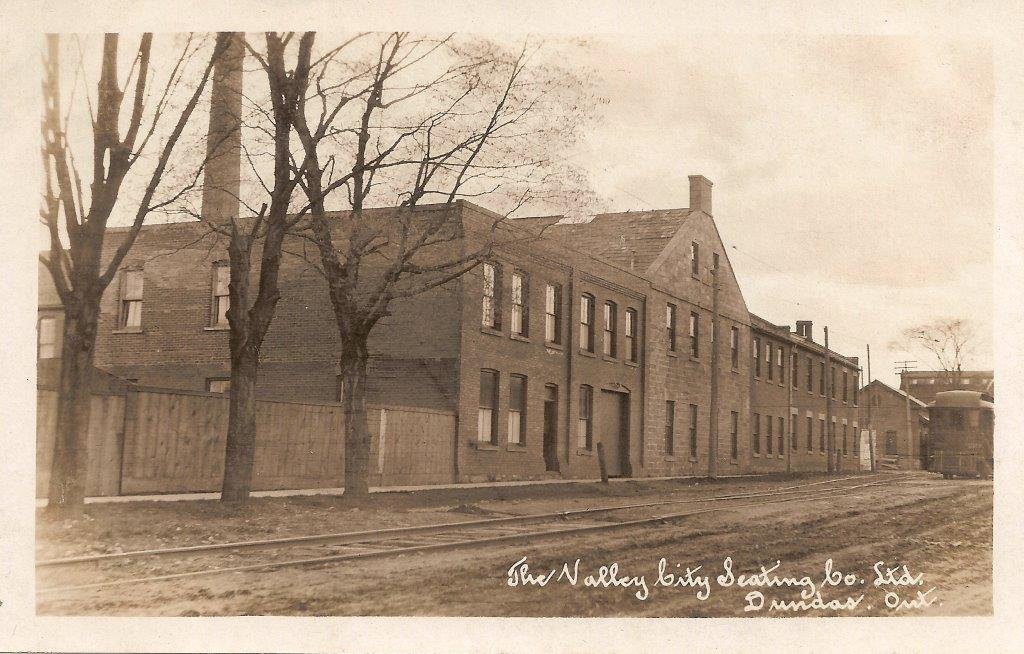
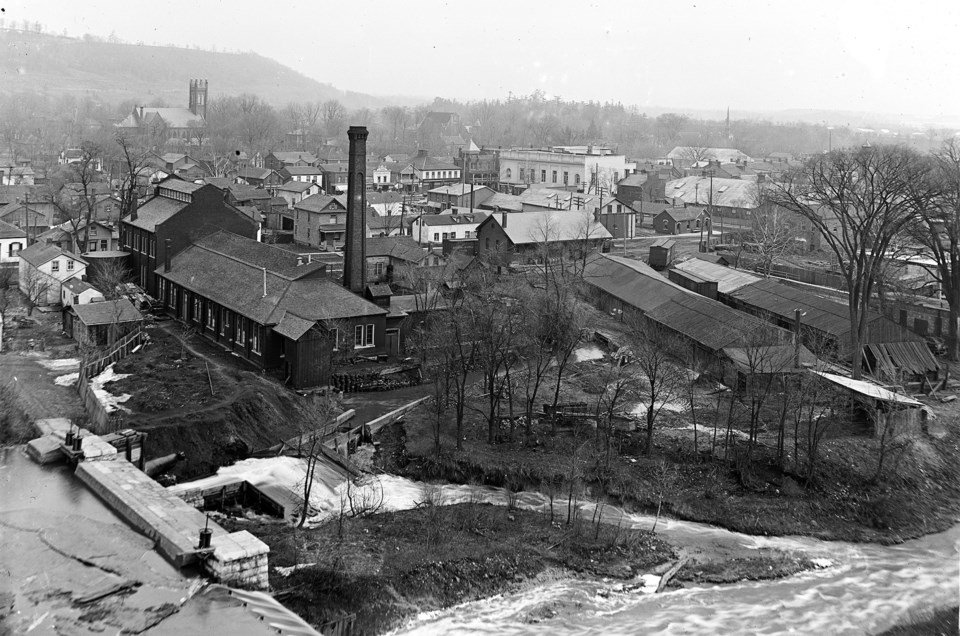
This building has stood on the banks of Spencer Creek since 1850, long before “Valley City Works” was a name anyone had thought to give it, back when Dundas itself was still a young town working out what it wanted to be. It started life as the Dundas Foundry and Machine Shop, backed by an investor named James Bell Ewart and a millwright named John Gartshore. From the first pour of molten iron, it was ambitious. At its peak, 150 men worked the floor, turning out steam engines and boilers for clients who mattered: the Hamilton Waterworks, the Great Western Railway. Historians have called it one of the most innovative manufacturing plants in Canada West. One of the machinists who trained on this floor, John Inglis, went on to found the company that would eventually become Whirlpool Canada. It’s the kind of place that quietly produces the people and ideas that go on to build other things.
None of that happened in isolation. Dundas exists because a man named Richard Hatt bought land on Spencer Creek in 1800 and started building mills. Yes, that Hatt. By the time he died in 1819, his operation included a distillery, sawmills, a blacksmith shop, and a general store, among other ventures, and he put most of the profits back into the town rather than his own pocket. The settlement that grew up around his mills eventually took the name Dundas. Walk down Hatt Street today and you’re walking through the answer to a two-hundred-year-old question: what happens when someone decides a valley is worth building in.
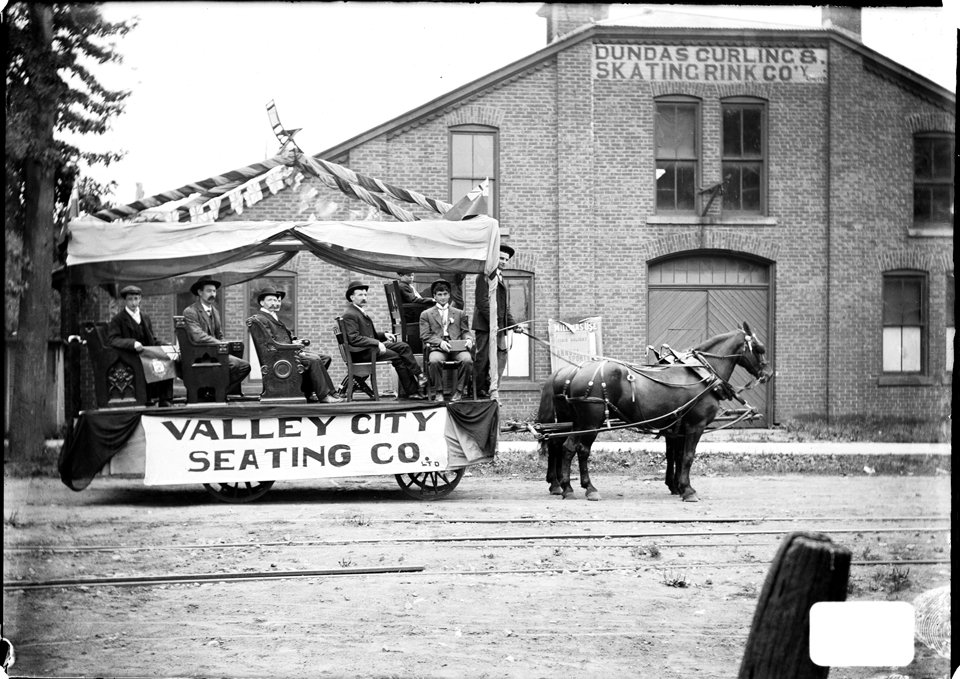
By 1890, the old foundry building had a new tenant with a new story. A company founded six years earlier in Hamilton by John D. Pennington and Edgar Baker, originally making wooden telephone boxes and school desks, moved in and rebranded as the Valley City Seating Company. Their specialty turned out to be church pews and other ecclesiastical furniture, a strange and oddly specific pivot that kept the lights on for decades.
And what decades they were. John Pennington handed the company to his sons in 1929, just in time for the Depression to bankrupt it in 1937. Hamilton builder J.M. Pigott bought it back from the brink in 1941 and brought in a 28-year-old named Nelson Crockford to run it, a decision that would shape the building for the next seventy years. Crockford bought the company outright in 1950. During the war, the shop floor made wooden cases for Bofors anti-aircraft guns. Afterward, under the name it would wear longest, Valley City Manufacturing, the company found steady work furnishing schools and universities, then found its most lucrative niche yet: custom laboratory furniture for research institutions as prestigious as Yale, Harvard, Cornell, and Princeton. By 1968, the company employed 200 people and did more than $30 million a year in sales. Bob Crockford took over from his father in 1978, and the family held a stake until 2004.
Valley City Manufacturing closed its doors in 2012, after 122 years on Hatt Street, unable to outrun the economics that eventually caught up with a lot of Ontario manufacturing. For a while, the building just sat there and waited. In 2023, the City of Hamilton formally designated it a property of cultural heritage value, official recognition of something anyone standing in front of it could already feel: that the brick, the timber, the sheer weight of everything that had happened inside, deserved to be kept rather than knocked down.
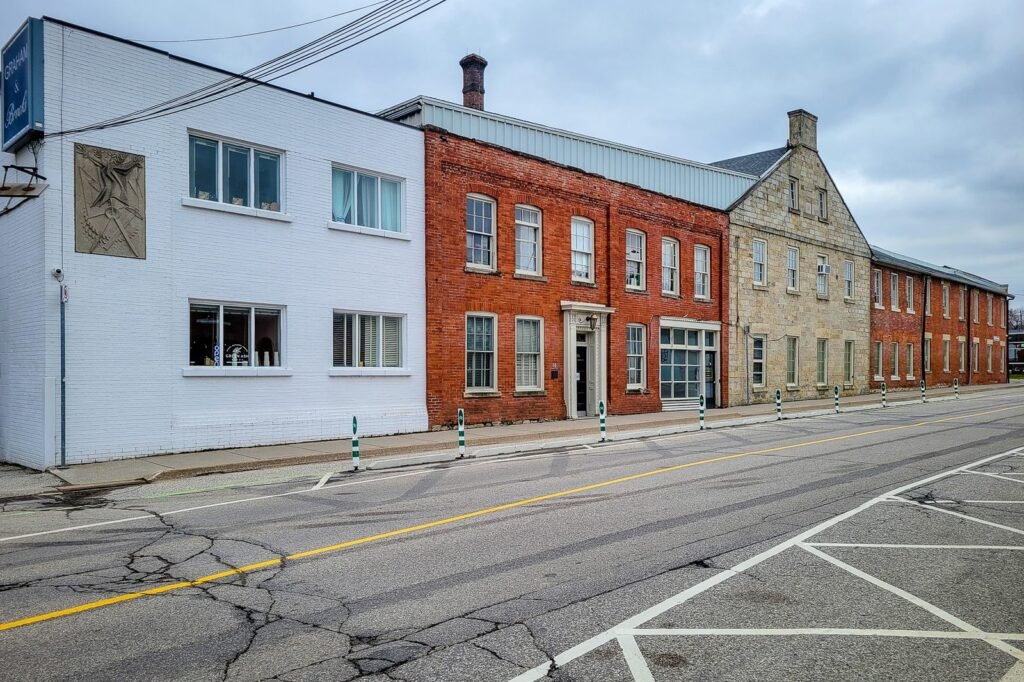
That’s the building we now call Valley City Works.
We didn’t pick the name to sound clever. It was already the name this place had earned, a century and a half of people showing up, making things, and building a town around the making. Today that looks different: tea blenders instead of foundrymen, a recording studio instead of a lab-furniture line, candlemakers where there were once machinists. But walk through and you’ll still see the 1850s brick, the exposed timber, the bones Ewart and Gartshore built and Crockford kept standing. We’ve spent the last stretch restoring the facade and modernizing what needed modernizing, working from one rule: keep what makes this building irreplaceable, and add only what makes it work for whoever’s here next.
If you’ve ever wondered what it feels like to run a business inside two hundred years of continuous ambition, come see the space. Dundas Peak is a short walk one way, Websters Falls the other, and the Saturday market is close enough to smell the coffee from. The building has never really stopped working. We’d just like you to be part of what it does next.